A figure with nine zeros on a company’s dashboard can signify explosive growth… or the hefty bill of a failure in customer data management. At Sarenza, vigilance is no longer just a reflex: it’s a matter of regulatory survival. Controls are piling up, GDPR requirements are raising the bar ever higher, and the slightest negligence can cost several million euros to those who let their guard down.
Case law continues to refine the boundary between tolerated parody and sanctioned counterfeiting. In the world of e-commerce, each new decision reshuffles the cards for shoe and accessory sellers. Brands sometimes attempt to invoke defamation to protect their image, but judges demand solid evidence: clear intent to harm, accuracy of facts, nothing is left to chance.
Further reading : Everything You Need to Know About Salary and Holiday Leave Recovery in CCN 51
The legal stakes of counterfeiting at Sarenza: obligations and responsibilities
Online commerce is now built under the watchful eye of the law. For Sarenza, the fight against counterfeiting is not a slogan; it’s a marked path of concrete responsibilities. Platform, sellers, brands: each must answer for their actions, or risk seeing justice intervene without concession. Intellectual property legislation applies everywhere, and a mere suspicion of counterfeiting can lead to court.
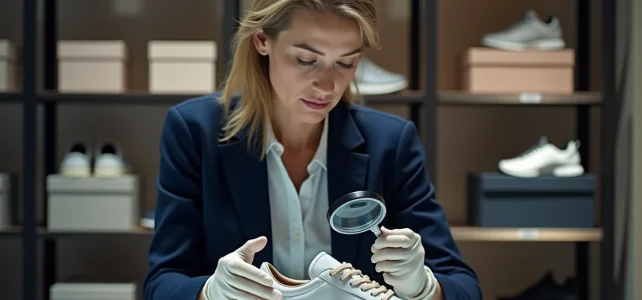
On the ground, the battle against counterfeiting imposes an arsenal of measures on Sarenza: product checks, training teams to spot fakes, close cooperation with authorities, rapid response to rights holders. A failure, and justice does not hesitate to strike hard. Large companies like Total have already learned this lesson the hard way in other areas, and the online fashion sector is no exception. In Paris, the desire to harmonize the fight against fraud is reflected in the application of texts like Article 209 B of the General Tax Code, particularly to monitor financial flows related to these sales.
Recommended read : Philippe Jaroussky: everything you need to know about his marriage, private life, and career
But responsibility does not stop at the platform’s doors. Third-party sellers are primarily concerned. Sarenza, as an intermediary, must ensure product traceability, while the justice system seeks to determine the share of responsibility of each actor. The reviews on counterfeiting at Sarenza illustrate the complexity of these cases: wary consumers, vigilant experts, demanding judges. Transparency and traceability are becoming the norm to avoid any missteps.
Customer data protection and intellectual property: what guarantees for consumers?
Trust is not decreed; it is built. At Sarenza, every personal data point passes through a system designed to lock down access and usage as much as possible. In France, the legal framework requires rigorous management: every document, every transaction, every digital trace of the customer is recorded in a secure environment, far from prying eyes.
Intellectual property remains a pillar: the item received by the customer must respect copyright, design, and trademark rights. To guarantee authenticity, Sarenza multiplies checks, documents the origin of products, and ensures their compliance. Traceability emerges as the best proof of transparency.
Here are the concrete measures implemented to reassure buyers:
- Data security: use of encryption, restricted access to sensitive information, frequent audits to detect any vulnerabilities.
- Respect for privacy: request for explicit consent for each collection, options for customers to modify or delete their data at any time.
- Guarantee of rights: active fight against counterfeiting, collaboration with rights holders to remove any disputed products.
Technique alone is not enough: consumer expectations go far beyond. They want proof, real guarantees. Platforms specializing in online sales must show their true colors: transparency policy regarding data usage, traceability of items, strict compliance with intellectual property rights. Against increasingly sophisticated fraud, the response must be commensurate: ongoing control, rapid reaction, and clear information for every customer.
Reacting to defamation and infringements: a practical guide to legal self-defense
Defamation sometimes arises unexpectedly, fueled by the virality of social media. Sarenza, like many other players in e-commerce, must learn to navigate this risk. When a company finds itself publicly targeted, there is no room for improvisation: action must be taken, and quickly. The first step is to gather evidence: screenshots, saving incriminating messages or posts, identifying the authors. Nothing should be left to chance, as only precise documentation allows for effective legal action.
Legal defense relies on a good understanding of the rules. In France, defamation, whether it affects an individual or a company, is severely punished. The process begins with a complaint or a direct summons before the competent court. Here, time is against the victim: the limitation period is three months from the dissemination of the statements. Not a minute to lose.
Before taking any steps, a few reflexes are essential:
- Chronologically retrace the facts, with dates, content, and any exchanges.
- Quickly consult a lawyer experienced in media or business law.
- Request the removal of the incriminating content if the infringement is evident.
The justice system scrutinizes each case carefully, especially in Paris, when it comes to defending a company’s honor or image. Recent decisions remind us that the procedure must demonstrate intent to harm and the damage suffered. Speed of action, a solid case, and expert advice remain the best allies in asserting one’s rights within the bounds of the law.
Vigilance has never been so tangible. As legal challenges intensify, every player in e-commerce finds themselves on a tightrope: between protecting customers, respecting creators, and defending their reputation, the slightest misstep can tip the balance. The question remains: who will manage to maintain the equilibrium tomorrow?