
At 6 years old, emotional mastery remains incomplete, even as the demands for autonomy increase significantly at home and at school. Some children express their frustration through outright refusals or sudden outbursts, without necessarily understanding what they are going through.
Those around them navigate between the desire to establish rules and the temptation to let go. We question, we experiment, sometimes we contradict ourselves, in the face of unexpected reactions that shake our references. However, there are concrete strategies to facilitate this delicate transition and support the child while maintaining family balance.
Further reading : How to Boost Your Career with a Dedicated Business and Employment Platform
What is at play in the development of a 6-year-old child
At this age, the desire to decide takes center stage: the child demands autonomy, wants to express their opinion, but their inner world is still filled with storms. An unexpected change in routine, a casually thrown instruction is enough to trigger a crisis. Clearly expressing themselves, putting words to what they are experiencing, is not always accessible. Screaming, refusal, or fleeing sometimes take over for lack of better options. They move cautiously between self-assertion and the need to find their bearings with an adult. This dance between displayed independence and the search for a parent’s support is the daily life of 6-year-olds, and there is nothing abnormal about it.
In the playground as well as at home, this back-and-forth repeats: they play the leader and then come seeking a knowing glance. This instability, difficult for those around them to follow, nonetheless builds the foundation of their future self-confidence. To delve deeper or gain perspective on this stage, this file offers you to understand the behavior of a 6-year-old child through precise insights and concrete advice.
Read also : Understanding Animal Welfare: Issues, Rights, and Protection of Animals Today
Why do crises emerge? Decoding opposition and anger
Challenging, saying no, opposing directly: at this age, it is often a test of reality. The child seeks to measure whether they can influence the world, whether the rule will hold or shatter. An unforeseen event, a disrupted routine, and there goes the tension rising. Words give way to screams, sometimes to abrupt gestures: the child overflows, literally.
Here, clearly, are some common forms of reactions in 6-year-olds in full self-assertion:
- Refusal to obey: they pretend not to hear or look elsewhere, not hiding their disapproval.
- Brutal anger: everything escalates suddenly, the argument quickly turns into a storm of screams or tears.
- Need to have the last word: they negotiate at all costs, argue, want to convince and impose their version.
| Signs of opposition | Examples of situations |
|---|---|
| Refusal to obey | Difficulty with an instruction, reluctance to comply |
| Sudden anger | Screaming or crying during an unexpected transition |
| Assertive will | “I choose”, endless debate to impose their solution |
Behind these reactions, there is less a desire to challenge than a visceral need to be understood. The child asks for a place, seeks to be listened to, sometimes clumsily. Putting words to what they are experiencing, reformulating their emotion, explaining the rule without raising their voice helps initiate calm. The stability of the framework, firmly established and repeated without overflow, reassures much more than it restrains. The child then knows what to expect: consistency, not laxity or arbitrariness.
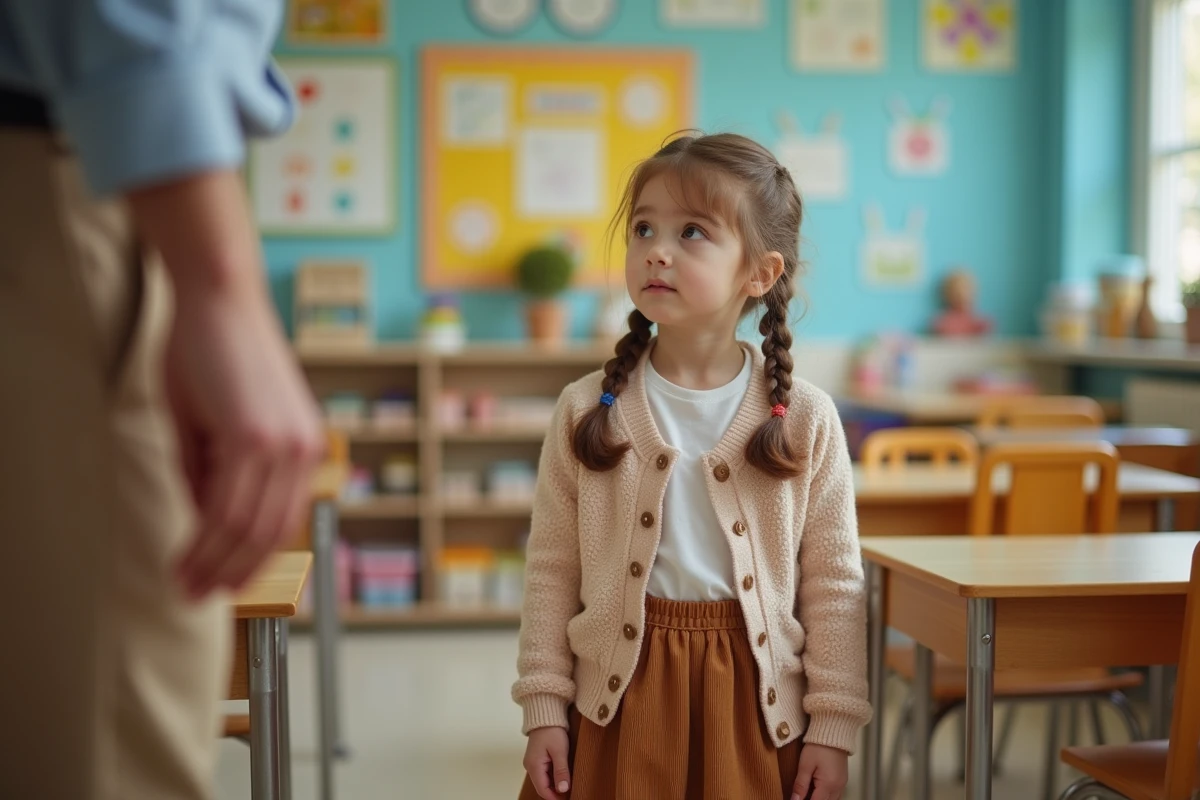
Concrete responses to support the child in the storm
Welcoming the crisis means first welcoming the emotion. Acknowledging their anger (“You seem furious”), naming their frustration, is extending a hand without yielding on the rule. The child lowers their guard when they know they are heard, even when angry.
To help a 6-year-old channel this overflow in daily life, establishing reference points helps immensely. Preventing before any transition, ritualizing the return home, marking the end of playtime, these simple gestures limit the element of surprise and unnecessary tensions. When it comes to choices, two options are enough: color of the sweater, bedtime story, accompaniment of the dish… This margin of maneuver, however minimal it may seem, nurtures the feeling of existing in ways other than through opposition.
Encouragement makes a difference. When an adult highlights a progress (“You put away your shoes all by yourself!”), the child feels their competence grow. Offering to negotiate on certain points, without ever diluting the fundamental rule, gives them breathing room while keeping the foundation intact.
The immovable boundaries, those that protect and structure, do not shift under pressure. Sticking to them, while explaining, builds their emotional security. In the face of turmoil, the child thus finds a solid adult. They understand that some reference points hold, even when everything is agitated inside.
Between flash conflicts and quick reconciliations, this construction game lasts a few years. But it is this patience, this solidity, that will one day open the door to new balances. In the face of the chaos of a crisis, remaining that reliable support allows the child to try, to complain, to start over, and ultimately, to engage with the world with a little more confidence each day.