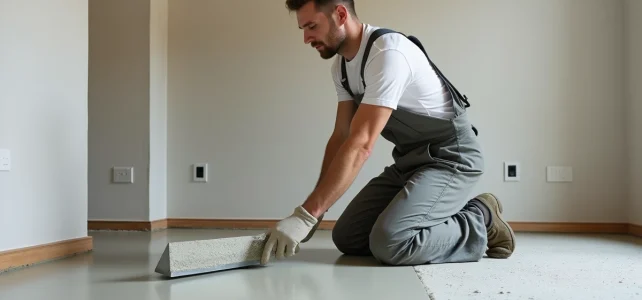
The irregularities of the substrate allow for no mistakes when installing a new covering. An unsuitable mix or poor application can compromise the durability and aesthetics of the whole. Some fiber-reinforced mixes, although suitable for almost all substrates, remain underutilized due to a lack of clear information on their implementation and cost.
The price differences between traditional materials and fiber-reinforced solutions vary depending on the surface, the nature of the ground, and the expectations regarding resistance. Knowing how to compare products, anticipate technical constraints, and request a precise quote helps avoid unpleasant surprises and optimize the investment.
Read also : Optimize Your Inbox: Practical Tips and Trendy Tools
Why choose a fiber-reinforced leveling compound for a perfectly leveled floor?
When the defects of the substrate go beyond simple irregularities, fiber-reinforced leveling becomes an obvious choice. Hollows, bumps, blisters, bulges: all these imperfections, common on wooden floors, concrete slabs, or aging tiles, require a solid material. Thanks to its reinforcing fibers, this type of leveling offers improved cohesion. Its dense and stable internal structure limits the formation of cracks and absorbs some of the movements of the substrate, where a traditional leveling compound quickly reaches its limits.
Choosing fiber-reinforced leveling ensures a perfectly flat floor and a covering that will last for years. Its superior mechanical resistance is suitable for heated floors, garages, or high-traffic areas. It easily manages significant level differences, up to 30 or 40 mm, without cracking. This mortar adapts to different substrates, whether OSB, concrete, or old tiles, and paves the way for the installation of parquet, tiles, or vinyl.
Related reading : Travel ideas and practical tips for exploring the world differently
To delve deeper into the subject and master each step, the article everything you need to know about fiber-reinforced leveling details installation techniques, substrate preparation, and advice to avoid common pitfalls. Proper execution not only affects the flatness of the floor but also influences daily comfort, the longevity of the covering, and ease of maintenance. If the situation requires a robust solution, the fiber-reinforced variant is essential.
What materials and prices for a fiber-reinforced leveling suitable for your project?
A successful leveling starts with the choice of materials and prudent budget management. The first step is to apply a primer: it prepares the substrate and ensures the proper adhesion of the mortar, which is essential on porous or fragile surfaces.
The heart of the process is the fiber-reinforced leveling mortar. Enriched with fibers, it provides the expected resistance on substrates marked by age or structural defects. It can be applied to concrete, OSB, old tiles, or wooden floors. If the floor has significant level differences, the combination of OSB or Fermacell boards, accompanied by an isofeutre underlay, proves effective in improving acoustic and thermal insulation while smoothing out minor irregularities (up to 2 mm).
To help you anticipate costs, here is a summary of materials and their frequently observed prices:
| Material | Usage | Indicative Price |
|---|---|---|
| Fiber-reinforced leveling mortar | Leveling, resistance | 20–40 €/bag 25 kg |
| Primer | Adhesion | 2–5 €/m² |
| OSB/Fermacell boards | Underlay, wooden floor | 10–20 €/m² |
| Isofeutre underlay | Insulation, compensation | 3–7 €/m² |
The overall quote must take into account the area to be treated, the type of substrate, and the constraints of the future covering. To achieve a perfectly flat floor, the quality and consistency of the materials used must never be left to chance.
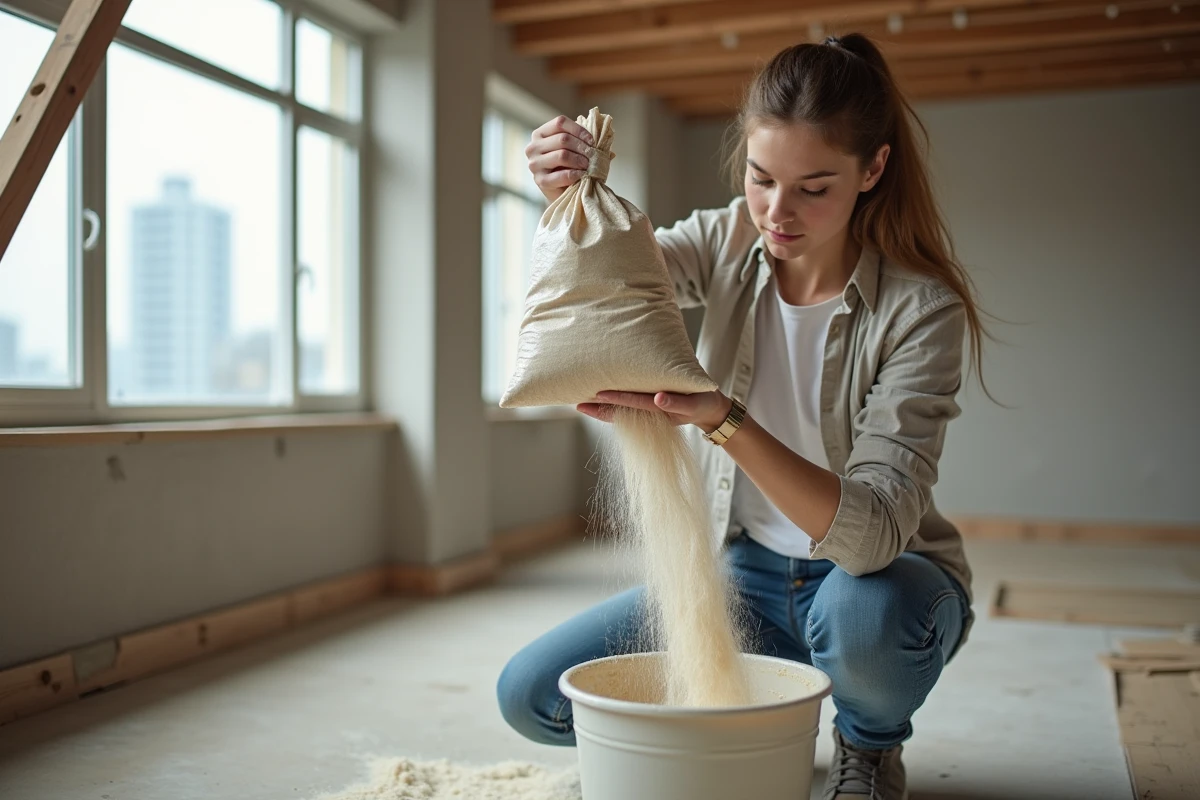
Key steps and practical tips for successfully leveling your floor
First and foremost, it is essential to analyze the condition of the substrate. Note any bumps, cracks, blisters, or unevenness. The floor must be dry, clean, stable, and dust-free. A concrete substrate may require sanding to remove residues and imperfections. A wooden floor or OSB slab requires stability checks, with no play or excessive flexing.
The application of the primer follows: it promotes adhesion and limits the risk of detachment. A mason’s rule and a spirit level will help you identify areas to correct and guide the spreading of the mortar. If certain areas have marked defects, fill them with a repair mortar before starting the overall leveling.
Always respect the thickness indicated by the manufacturer. Excessive mixing or rapid drying are the enemies of a durable result. Mix the mortar slowly to achieve a smooth paste, then apply it with a trowel, moving piece by piece to maintain the self-leveling effect.
To ensure a result that meets your expectations, here are some additional tips to follow:
- Before any intervention in a damp area, ensure that the substrate is well waterproofed.
- Consider checking the temperature and ventilation of the room: the optimal range is between 8 and 25°C, without drafts.
- Adhering to the drying time, usually 24 to 48 hours, is essential before laying the final covering.
A project carried out with care at every stage protects against structural defects and prolongs the longevity of your floor. On complex surfaces or those subjected to high constraints, the intervention of a professional remains the best guarantee. Choosing the right materials and methods ensures you a flawless floor, ready to welcome life without ever wavering.