
42 billion tons of CO2: that’s the annual bill for our planet, and international tourism only adds to the cost. While carbon hunting is being organized, with surcharges on plane tickets in some countries and active promotion of local tourism elsewhere, awareness remains timid. Few know that a train journey can emit up to twenty times less greenhouse gas than a flight over the same distance.
Behaviors are changing, but slowly, despite a proliferation of green labels and a myriad of local initiatives. However, daring to take alternative routes seriously reduces the carbon footprint and supports often fragile local economies, far from the beaten paths.
Further reading : Optimize Your Inbox: Practical Tips and Trendy Tools
Traveling differently: why rethink our ways of discovering the world?
In the face of overcrowding at major sites and the impact of mass tourism, choosing to travel differently is no longer trivial. Crowds disfigure landscapes, the environment suffers, and locals sometimes see their daily lives transformed into a backdrop. Exploring the world differently means rethinking how we meet others: respecting nature, being interested in cultures, and giving weight to the local economy. Responsible tourism is neither a stance nor a simple slogan. It is a concrete approach that challenges our habits.
Stepping away from a consumption-driven travel logic also means opening up to the unknown. Taking the time to listen to the stories of those who live there, lingering where guides do not stop, and refusing the standardization of experiences. Platforms like https://www.lesvoyagesdemma.fr/ prove that one can combine simplicity and discovery without sacrificing curiosity.
Related reading : How to Choose the Perfect Hairstyle for Your Little Girl: Original and Trendy Ideas
Every choice impacts the balance of a territory. Taking the train instead of a plane, opting for a multi-day stay rather than a series of quick weekends, selecting locally involved accommodations: these concrete decisions shape the face of tomorrow’s tourism. Taking time, settling in, and favoring soft mobility all redefine the relationship with travel.
Here are some levers to act upon from the preparation stage:
- Respect for local populations: prioritize sincere exchanges and dialogue.
- Local consumption: give priority to local products and know-how.
- Protection of biodiversity: ensure that sensitive natural environments are not disturbed.
Ultimately, responsible travel does not diminish the pleasure of discovery. It invites us to rediscover the power of the word explore: to look, listen, and be amazed, simply.
What gestures and choices for truly responsible travel in everyday life?
A responsible journey is built in every detail, starting from the preparation. The mode of transport sets the tone: train or bus rather than plane for short distances, bike or walking to explore a region, slowing down to savor each step. This is where we concretely reduce the carbon footprint, well before relying on good intentions.
At every stop, supporting the local economy makes perfect sense. Strolling through markets, buying from local artisans, staying with locals, or choosing accommodations involved in local life all reinject value where it is created. As for wildlife, vigilance is essential: ban activities that exploit animals, report abuses, and choose initiatives that protect biodiversity.
Here are some simple gestures to adopt throughout the stay:
- Opt for soft mobility to explore the surroundings.
- Prefer staying with locals for authentic exchanges.
- Turn to local products, supporting artisans and restaurateurs of the country.
- Respect customs, even those that seem trivial.
Projects like Tree-Nation offer to plant trees to offset some of the emissions generated by travel. But in everyday life, it all starts with simple gestures: reducing waste, saying no to disposable plastic, choosing reusable products. Far from restricting the experience, this simplicity gives new meaning to travel.
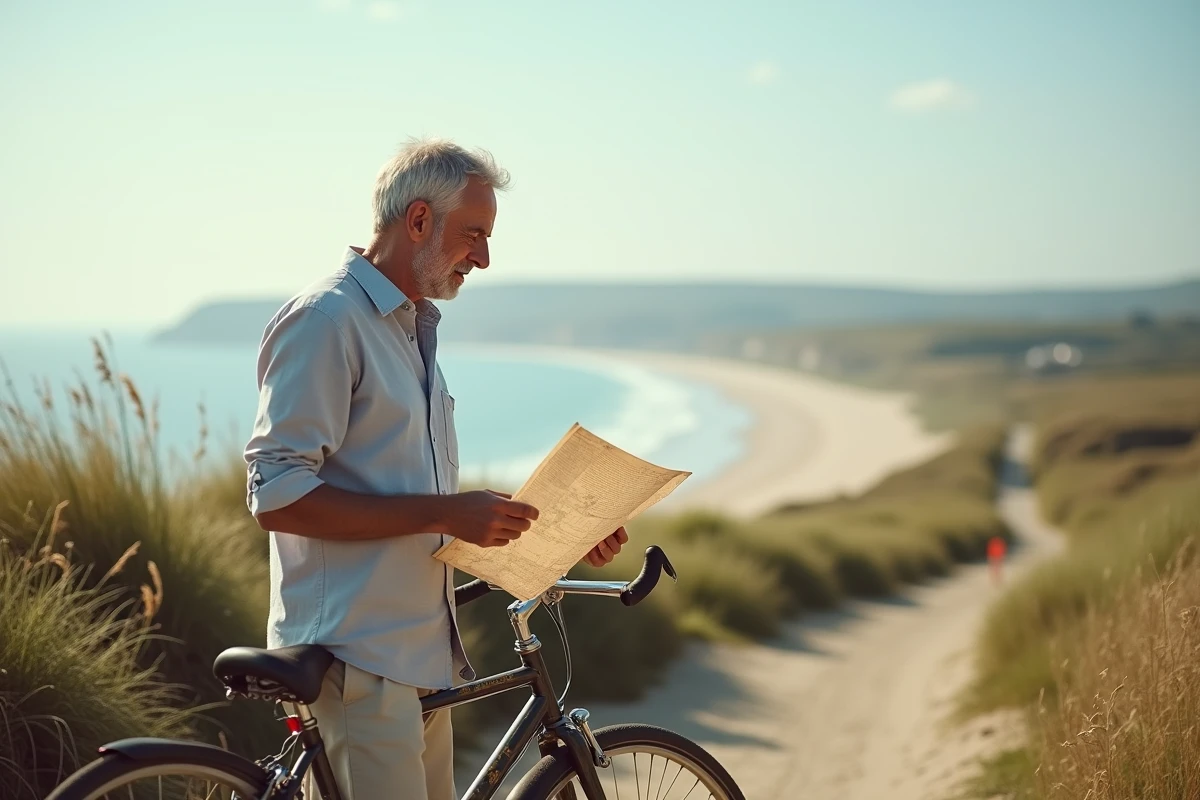
Inspiring ideas for exploring the planet while respecting it
Setting out to meet the world differently also means selecting destinations where authenticity and respect align daily. Away from mass tourism, the Cotentin Peninsula, the Black Forest, or North Macedonia invite you to slow down. The national parks of Costa Rica, Iceland, or Big Bend National Park in the United States embody this desire to preserve nature and the cultures connected to it.
In choosing a family-run accommodation in Freiburg, a craft workshop in Crete, or a shared meal in Slovenia, respect for local culture and the simplicity of exchange take precedence. In Africa, whether in Tétouan, Lesotho, Congo, or the islands of Madagascar, stepping away from the preconceived image allows for stays where the encounter takes precedence over performance.
To guide you, here are some avenues to explore:
- Choose gentle itinerancy: a leisurely road trip in Vietnam, hiking the Shikoku trails in Japan, immersing in a village like Tubagua.
- Take the time to consult travel journals or testimonials to prepare an itinerary aligned with your values.
Developing a thoughtful approach also means prioritizing less frequented places, choosing the right season, and engaging local guides who are invested. The world then reveals its treasures in the light of a preserved landscape, the warmth of a welcome, and the discovery of an unexpected flavor. Traveling differently means accepting that surprises arise where we finally stop running.