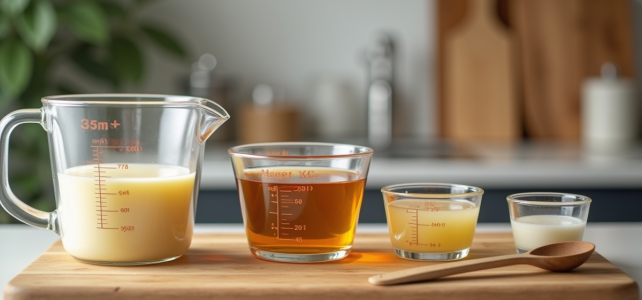
In cooking, knowing how to juggle measurements is essential, especially when it comes to liquids. Whether you’re following an American recipe using cups or a French recipe in milliliters, conversions can quickly become a headache. Imagine wanting to prepare the perfect sauce for your dish, but you find yourself faced with incomprehensible measurements.
Understanding the equivalences between milliliters, liters, cups, or fluid ounces not only helps maintain proportions but also prevents mistakes that could ruin a recipe. This becomes even more fundamental for those who love to explore recipes from different culinary cultures.
Related reading : Learn Measurement Conversions in Cooking for Beginners
Liquid Measurement Units in Cooking: Understanding and Converting
In the realm of cooking, mastering conversions between different measurement units is essential. Liquids, in particular, require special attention. The main units are milliliters (ml), centiliters (cl), and deciliters (dl).
Common Equivalences
To facilitate conversion, here are some basic equivalences:
Recommended read : Evolution of Email Services: The Case of Wanadoo in 2024
- 1 cl = 10 ml
- 10 cl = 100 ml
- 1 dl = 100 ml
- 100 cl = 1000 ml
These conversions allow you to juggle between recipes without the risk of error. For example, to convert 300 ml to cl, simply divide by 10, resulting in 30 cl. See more methods on the dedicated page ‘Calculation Methods for Converting 300 ml to cl – Les Coudes sur la Table’.
Advanced Conversions
Some recipes require more complex conversions, particularly between volume units used in different countries. For this, knowing the equivalences between units like cups and fluid ounces is fundamental. For example, 1 cup is approximately 240 ml.
The use of online conversion tools or printed conversion charts can be very helpful for both amateur and professional cooks. These tools ensure accurate measurements, and therefore consistent culinary results.
Mastering these conversions will allow you to navigate effortlessly through the international world of cooking, ensuring the success of your culinary creations.
Tools and Tips for Accurate and Quick Conversions
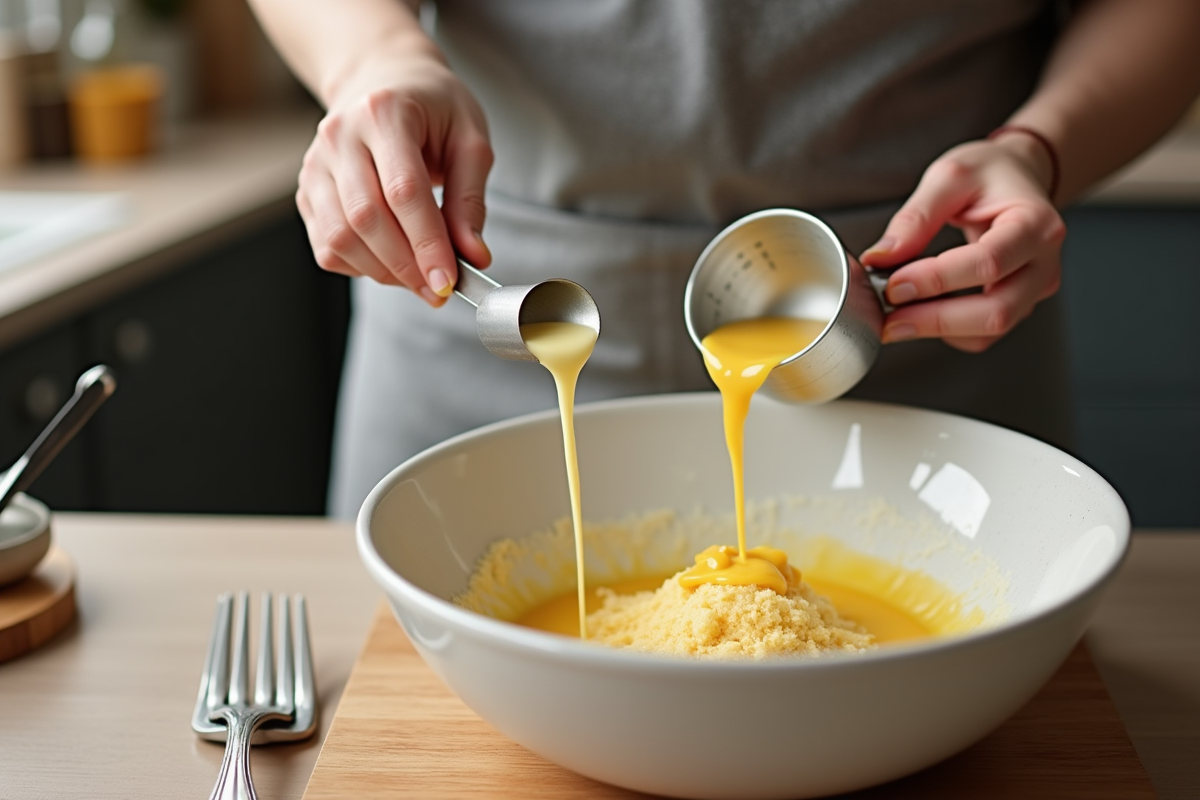
To ensure precise measurements in cooking, use appropriate tools such as teaspoons, tablespoons, and cups. These utensils are often calibrated, making it easier to convert volumes.
Common Equivalences for Liquids
- 1 teaspoon = 5 ml
- 1 tablespoon = 15 ml
- 1 tea cup = 250 ml
Measuring cups, with their clear graduations, are also valuable allies. They allow you to measure not only liquids but also some dry ingredients like flour and granulated sugar.
Tips for Specific Ingredients
For ingredients such as water, milk, and olive oil, using precise measurement units is essential. For example, 100 ml of water or milk is approximately 100 grams. This equivalence makes it easier to convert between recipes and ensures consistent results.
| Ingredient | Equivalence |
|---|---|
| Flour | 1 cup = 130 g |
| Sugar | 1 cup = 245 g |
| Butter | 1 cup = 240 g |
For vegetables and fruits, gram equivalences are often used. For example, a medium carrot weighs about 100 g, while an apple can vary between 150 and 200 g. Knowing these equivalences allows you to adjust the necessary quantities in recipes.
Using Digital Tools
Online conversion apps and printed conversion charts offer valuable assistance. They enable quick and accurate conversions, thus avoiding mistakes and optimizing the time spent in the kitchen. With these tools, you can easily navigate between different measurement units and ensure the success of your dishes.